

Travel awakens our senses to new tastes, sounds and cultures. Yet, it’s the natural wonders that tend to attract and inspire us, branding images in our mind’s eye. Some sights require long-distance travel, while others are seen close to home. I recently observed one such wonder from a friend’s backyard and began pondering the most magnificent sights I’ve seen.
You may have read about the “seven wonders of the world.” There are various lists of ancient wonders, engineering wonders and natural wonders. Travelers sometimes hear of a place touted as the “eighth wonder.” But where did these come from? Who decides? Who maintains the official list? In reality, there isn’t one. Even the seven wonders of the ancient world, only one of which still stands, were debated. That makes it more fun, as we each can create our own list. This post recounts my top five natural wonders from five decades of travel.
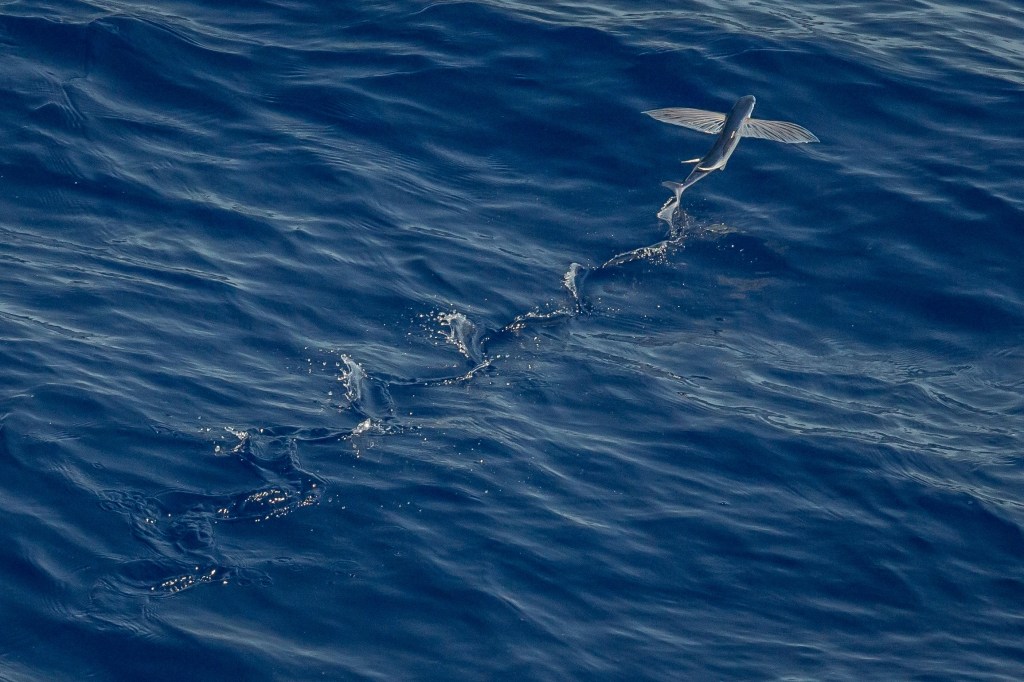
5. Flying Fish – I first caught a glimpse of these unique creatures at night off the island of Aruba in 1993. I thought they were akin to flying squirrels who leap and glide long distances. I was wrong. On a transatlantic freighter crossing I got to experience their real magic. These winged fish flap their wings and create lift! Their rattling wings crackle like cellophane as they skip and skitter across the waves.
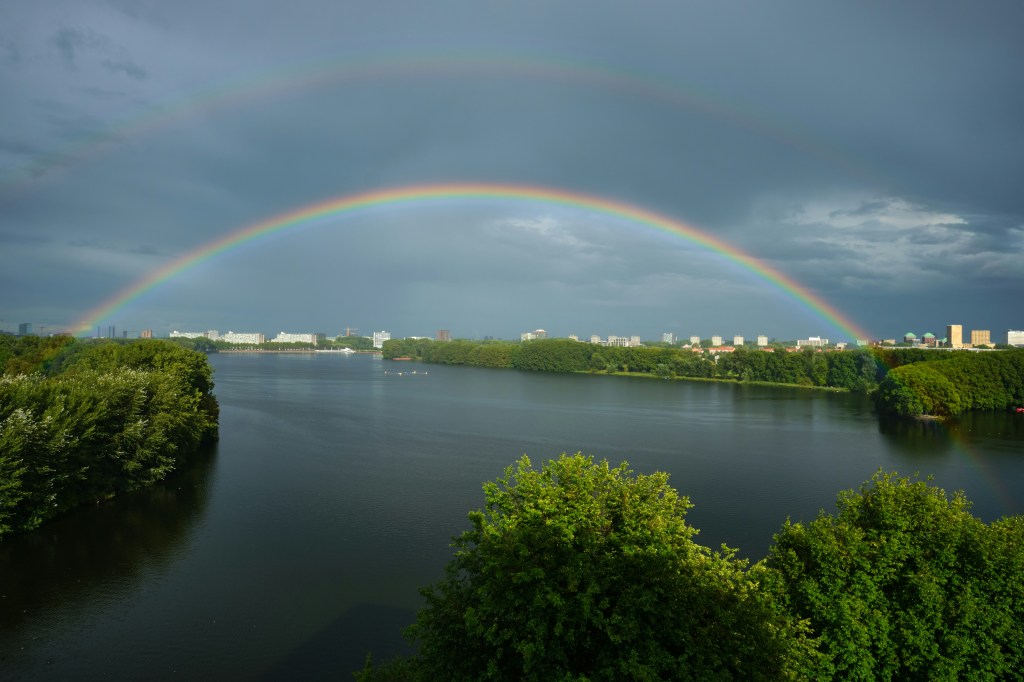
4. A Triple Rainbow – Most of us have seen rainbows; they are fairly common. But you have to intentionally hunt for them. There’s a trick – look for rainbows right after a rain shower when the sun pops out. Face away from the sun. Occasionally, with intense sunlight and the right conditions, two or more bows are visible. I’ve seen double rainbows several times. The second bow’s colors appear in reverse order (VIBGYOR instead of ROYGBIV!) and are lighter in intensity. In 1997, though, at the southern tip of South America, I spotted a rare triple rainbow. A double rainbow stretched across the bay, while the third band faintly streaked the sky above it all.
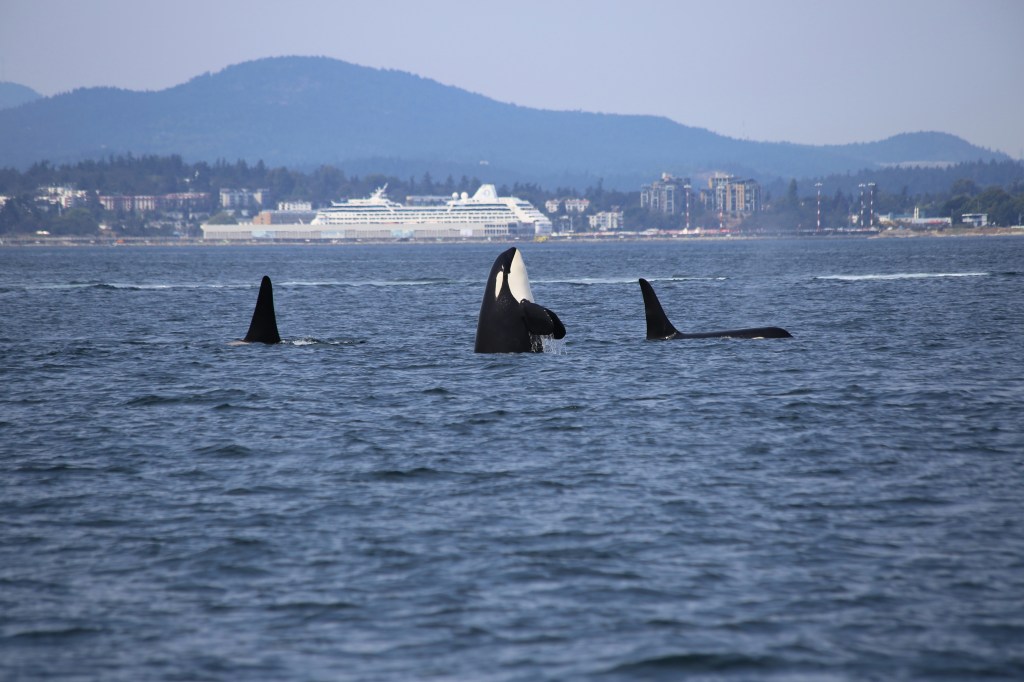
3. The Orca Parade – In a blog titled “Rails, Whales and Tales, I had to include a whale sighting. I’ve seen grey whales breaching in California, humpbacks cavorting in Antarctica, and right whales playing in South Africa. I’ve even seen a mother and baby whale watching ME on the stormy southern coast of Australia. But my favorite encounter was on a boat trip from Victoria, British Columbia. A radio crackled with an orca pod report as we sped toward it. We drifted and waited. A big female swam right under our boat, turning her bright white belly upside down to show off! Other orcas began chasing a small porpoise. We squealed with laughter as it leaped from the water. They played with it for several minutes before letting it go. Wow!
2. The Grand Geyser – Yellowstone, the world’s first national park, is known for both its wonders and wildlife. And there are too many to name. Not only the famed geysers, the park is also chock full of waterfalls, canyons, hot springs, and paint pots dot the landscape. But geysers are very rare, occurring in only four spots on planet Earth. Old Faithful, the most famous, is special in its height and frequent eruptions. But I think the best show is Grand Geyser. Unlike jetting cone geysers, Grand is a fountain geyser. As the eruption nears, the natural pool around the vent fills up. Then, it’s showtime! The pool begins frothing, bursting and bouncing as trapped gasses below shoot skyward in an unchoreographed dancing spray. The eruption lasts about 10 minutes until the pressure is released, but Grand Geyser saves its best for last. Unlike a roller coaster, where the big thrill happens first, this geyser usually ends with a gigantic super burst of rocketing water, much higher than the previous displays. It erupts about every seven hours, but is worth the wait!

1. Total Solar Eclipse – Eclipses happen yearly, but most are not total eclipses. Many are not visible from populated areas. I’ve always enjoyed astronomy, but had never been lucky enough to see a total eclipse. I observed an annular, or “ring of fire” eclipse in 1984. These happen when the moon is too far away to completely cover the sun, so they are not as spectacular. I also saw a partial solar eclipse during a transatlantic cruise, but the sun is so bright that even a 98% partial eclipse is not that interesting. There was a total eclipse along the US east coast in 1970, but I missed it. The USA then went through a long 47-year drought without a total eclipse. I was living overseas during the big eclipse of August 2017.
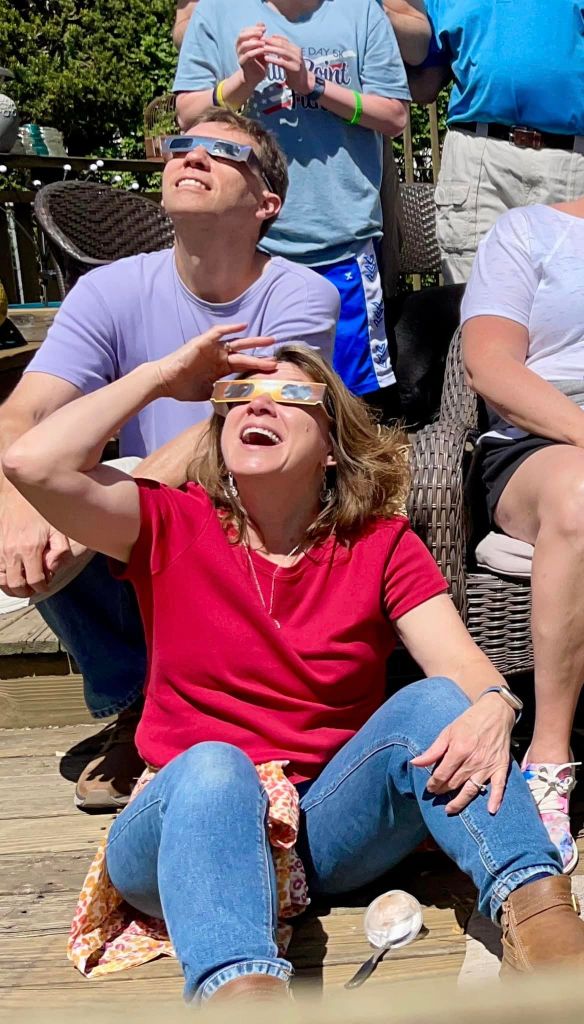
But I finally got the chance on April 8, 2024, to witness one. Some travel long distances chasing eclipses, but occasionally, like in Missouri in *both* 2017 and 2024, one can happen in your neighborhood backyard. And nothing, and I mean NOTHING, can prepare you for the grandeur of nature’s greatest spectacle, a total eclipse of the sun. While eclipses can be predicted far in advance with great accuracy by astronomers, the weather can’t. Many flocked to Texas in 2024, hoping for clear skies, but we headed to Cape Girardeau, Missouri. While the morning was foggy, the weather began clearing as the big moment approached. About 30 minutes before totality, that moment when the moon blocks the sun, the skies cleared completely. We ripped off our protective glasses and were surrounded by dark skies. Birds quieted while streetlights dimmed. We shrieked with delight at the sight of a black disc blotting out the sun! Visible corona rays streaked in different directions. A bright pink jewel sparkled like a gemstone along the moon’s lower edge. We later learned it was a solar prominence. Having witnessed this glorious, gob-smacking display, I am excited for 2045 when the moon’s shadow will again cross the USA!

Honorable Mentions: I couldn’t end this post without a few other special sights. Two waterfalls along international borders are worthy of special note. Africa’s Victoria Falls span the border between Zimbabwe and Zambia, while the Iguazu Falls dazzle at the three frontier of Brazil and Argentina. And while I haven’t yet seen the northern lights, many witnessed a spectacular display of the aurora borealis in May 2024. Maybe someday!
What are your favorite natural wonders? Please share in the comments section below!
 Rails, Whales and Tales